Each row is a live website: who it was built for, which problem it solves, and what was measured after launch, on which date. Tap a row to open its entry.
What a case means hereEach one opens with measured values, states the measurement method and says on which date the numbers were taken.
What measurement does not showThe numbers on this page are technical measurements, and technical measurements do not tell the whole story of a job.
If you want to measure for yourselfRepeating the measurement needs no special tool: the performance tab in the browser’s own developer tools gives the same values with a reload that has the cache disabled.
ENTRY 01 · frekans.studio · LIVE
Frekans Studio
Studio product · design + development
frekans.studio ·
PROBLEM
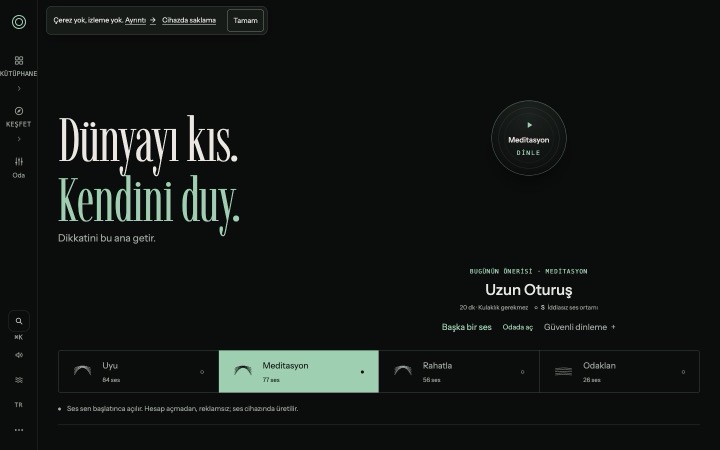
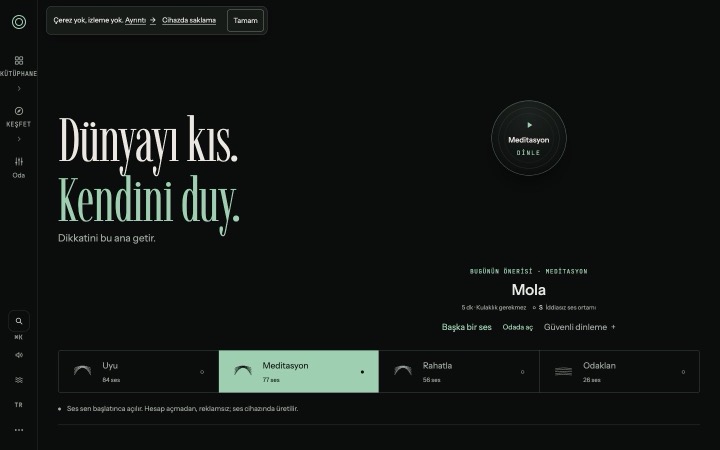
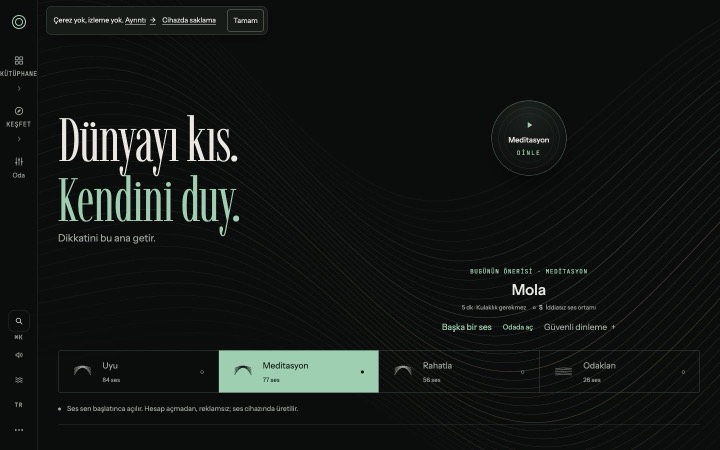
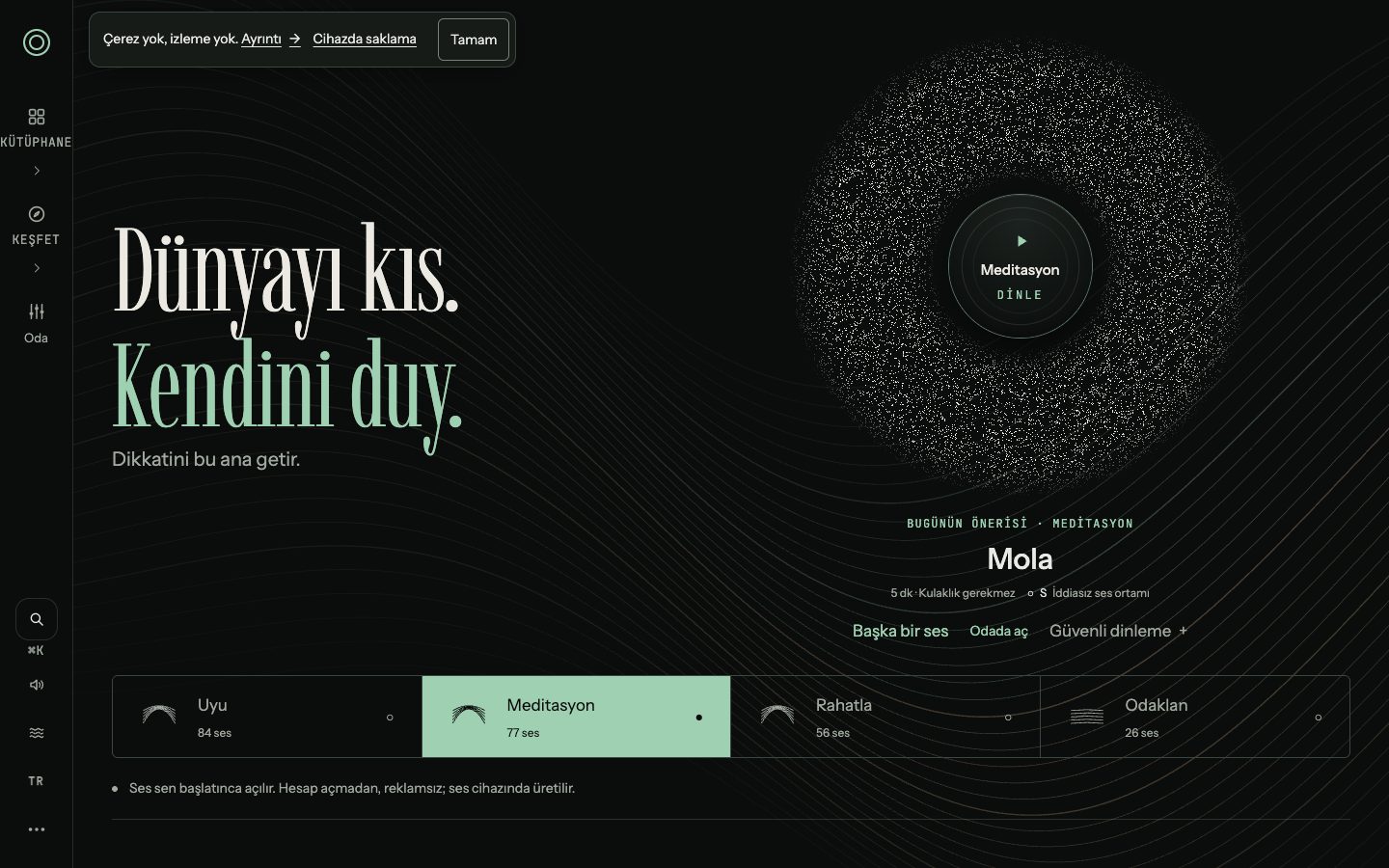
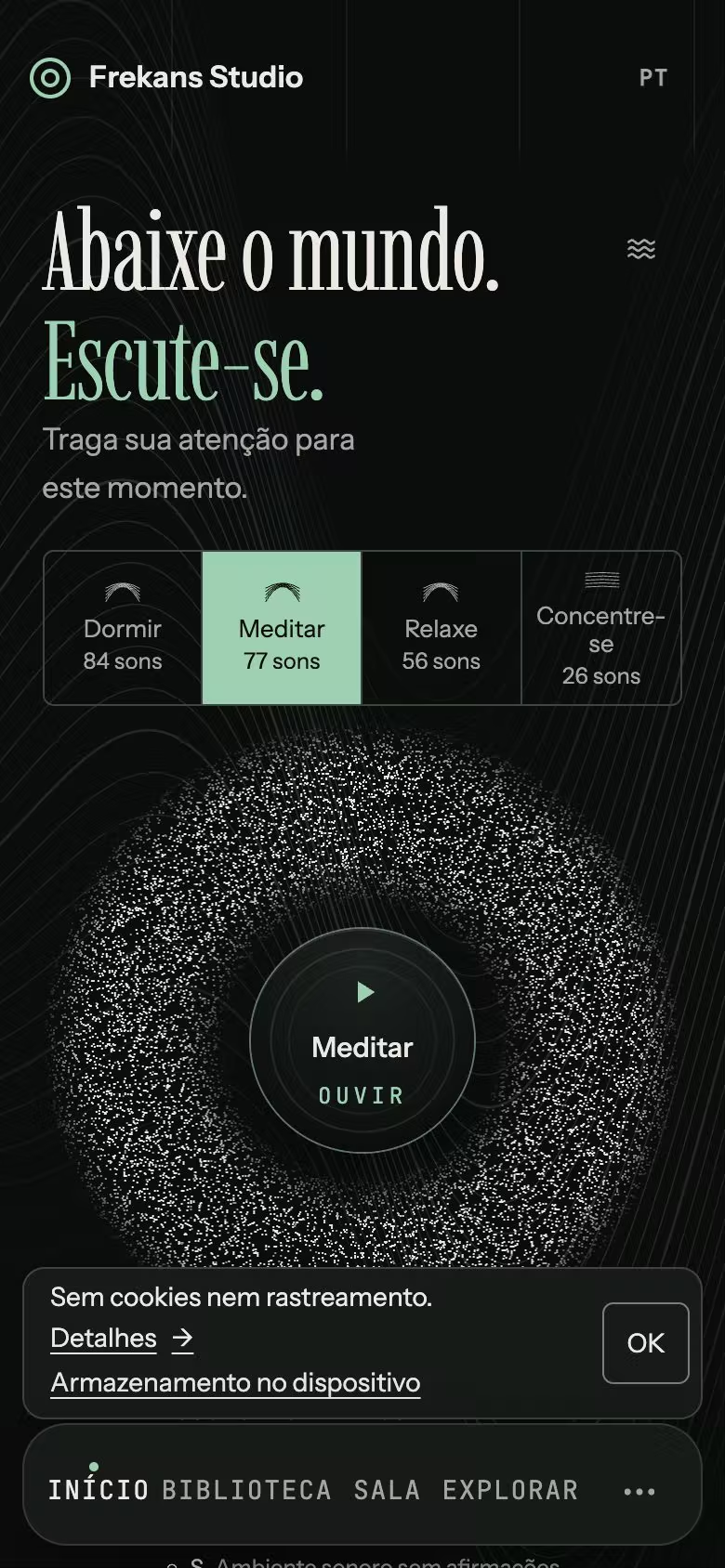
Frekans Studio is a sound lab offering sounds for sleep, relaxation and focus, and it sets itself a hard rule: each of its 357 sessions is shown only as strong as the weakest scientific claim it rests on. What is not known is written down just as plainly. In the site’s own words: "'It doesn’t work' and 'the evidence isn’t sufficient yet' are different things."
APPROACH
Design, sound engine and code were made in the studio. Every sound is generated by a single signal-processing core on the visitor’s device; no audio file is downloaded from a server. The evidence library links 35 claims to 196 sources, every citation verified against its Crossref or PubMed record. Turkish, English, Spanish and Portuguese are equal: every section carries the same number of addresses in all four languages.
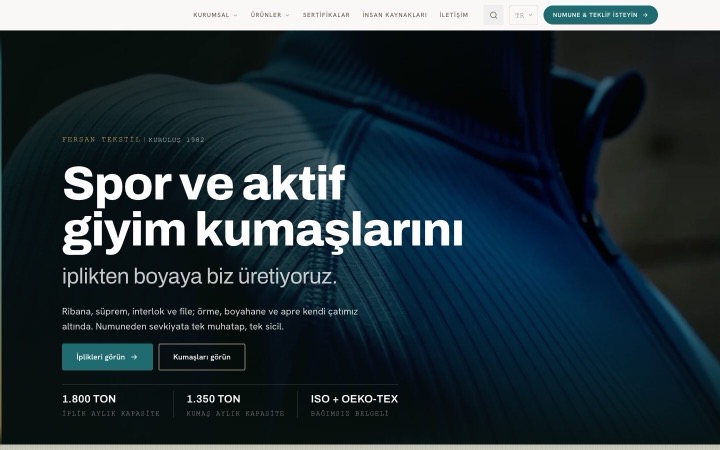
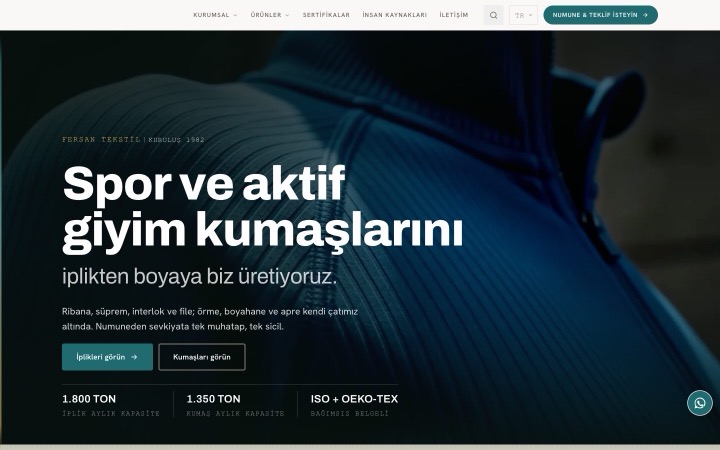
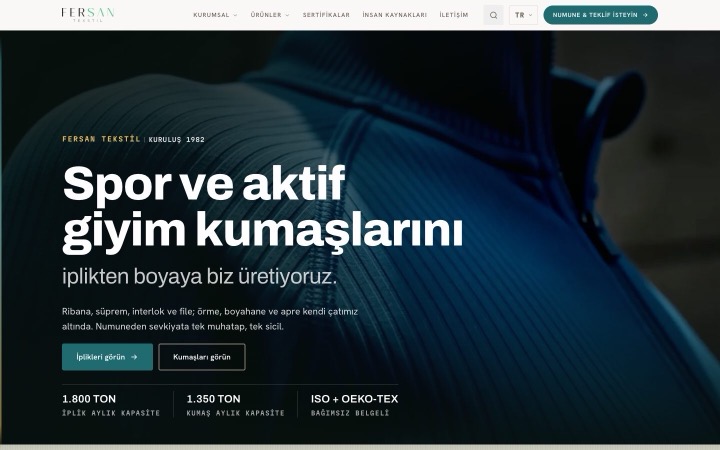
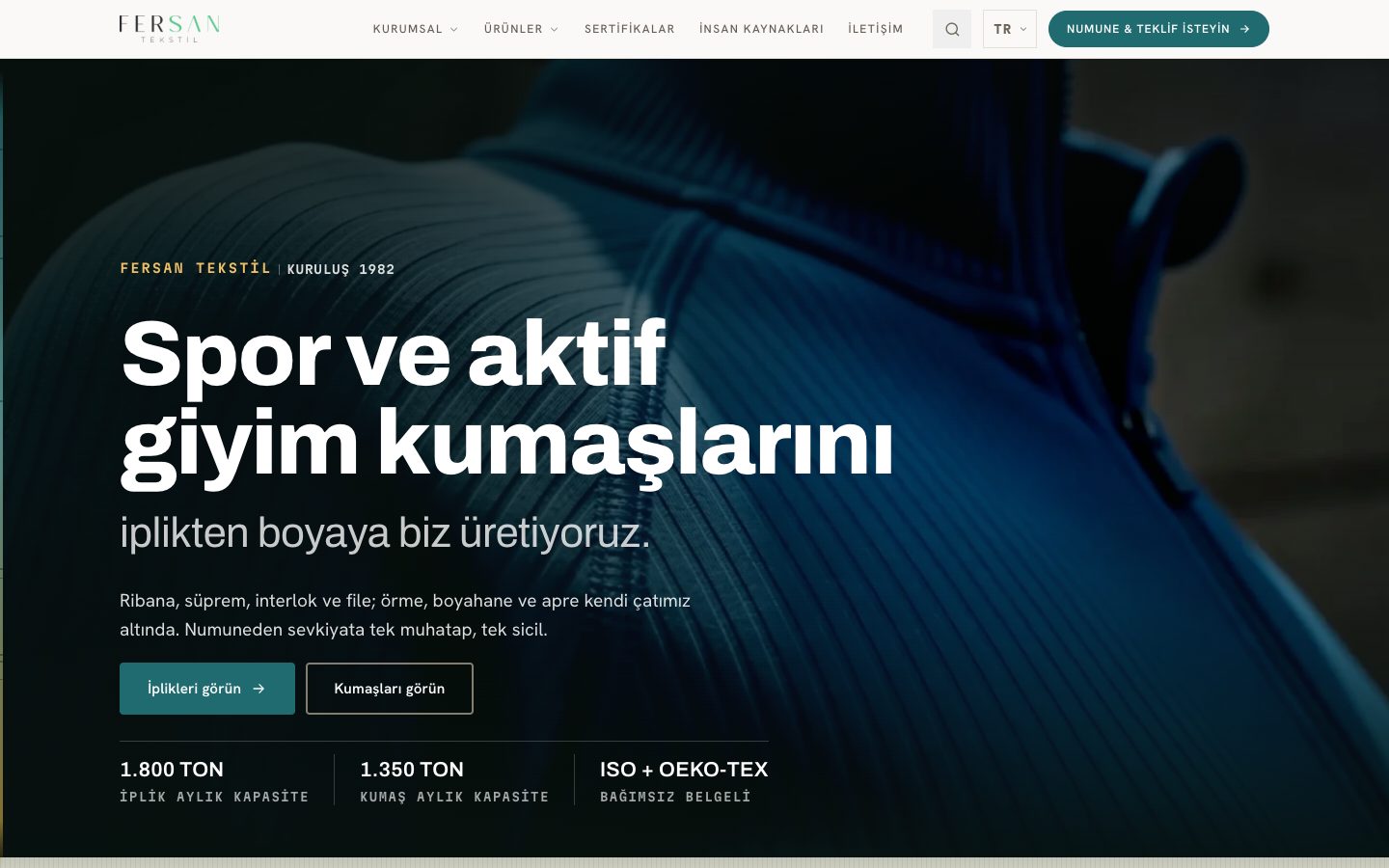
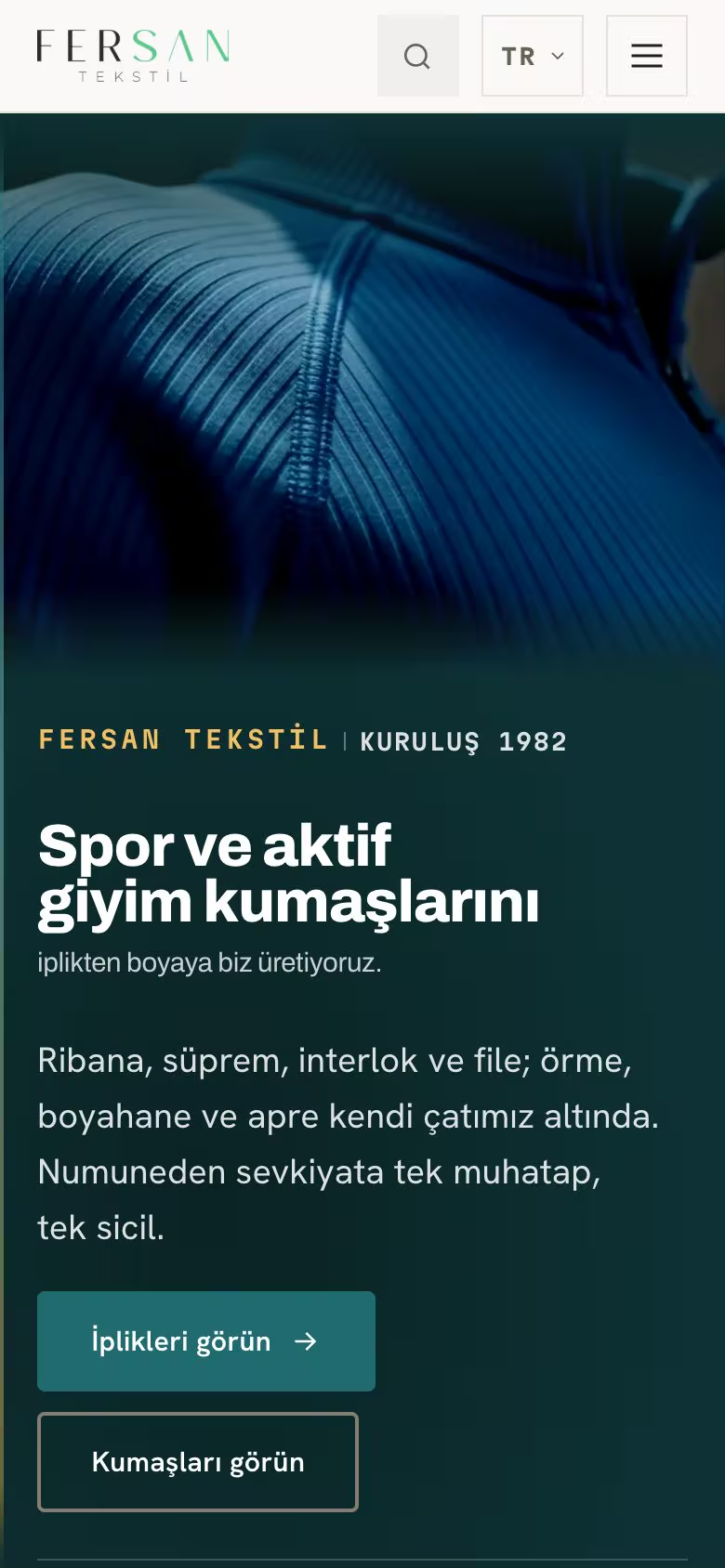
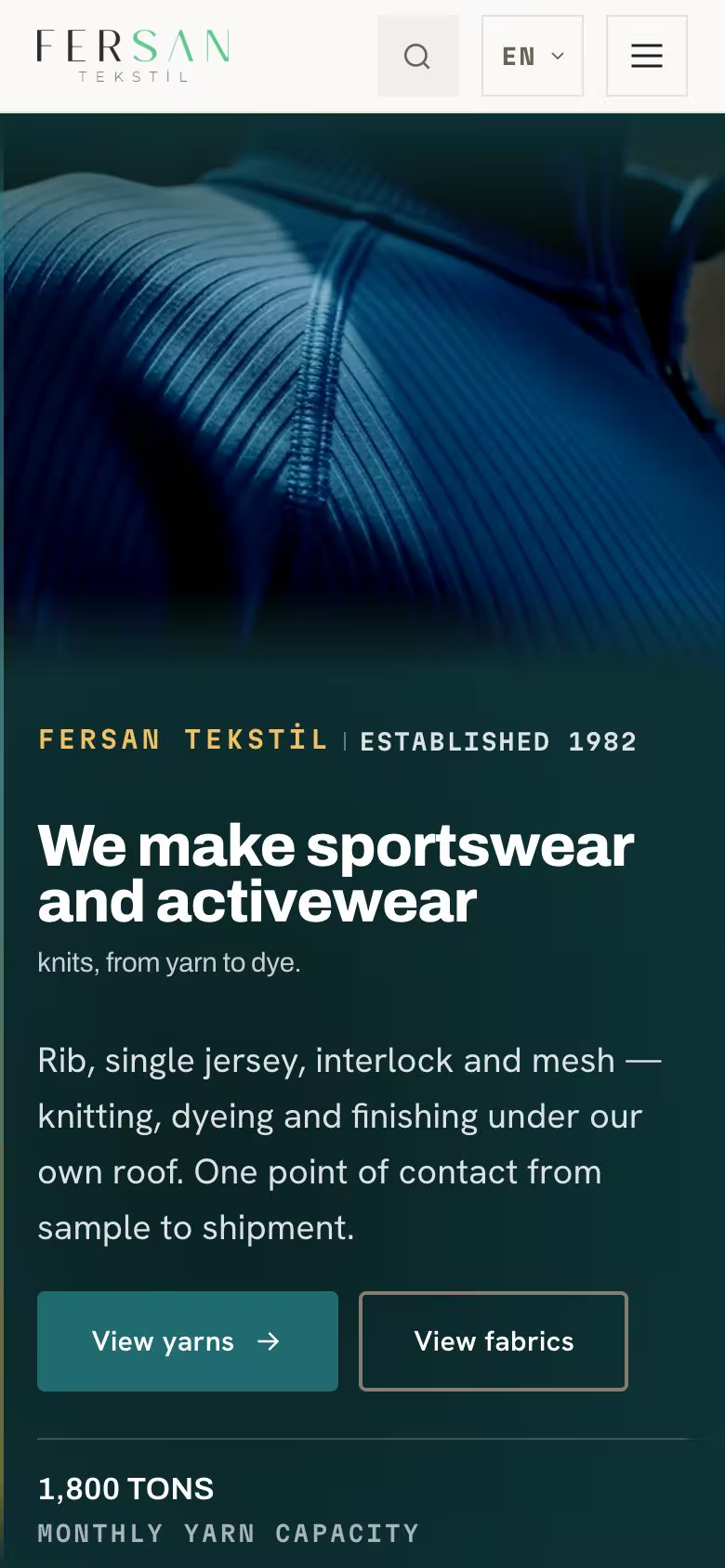
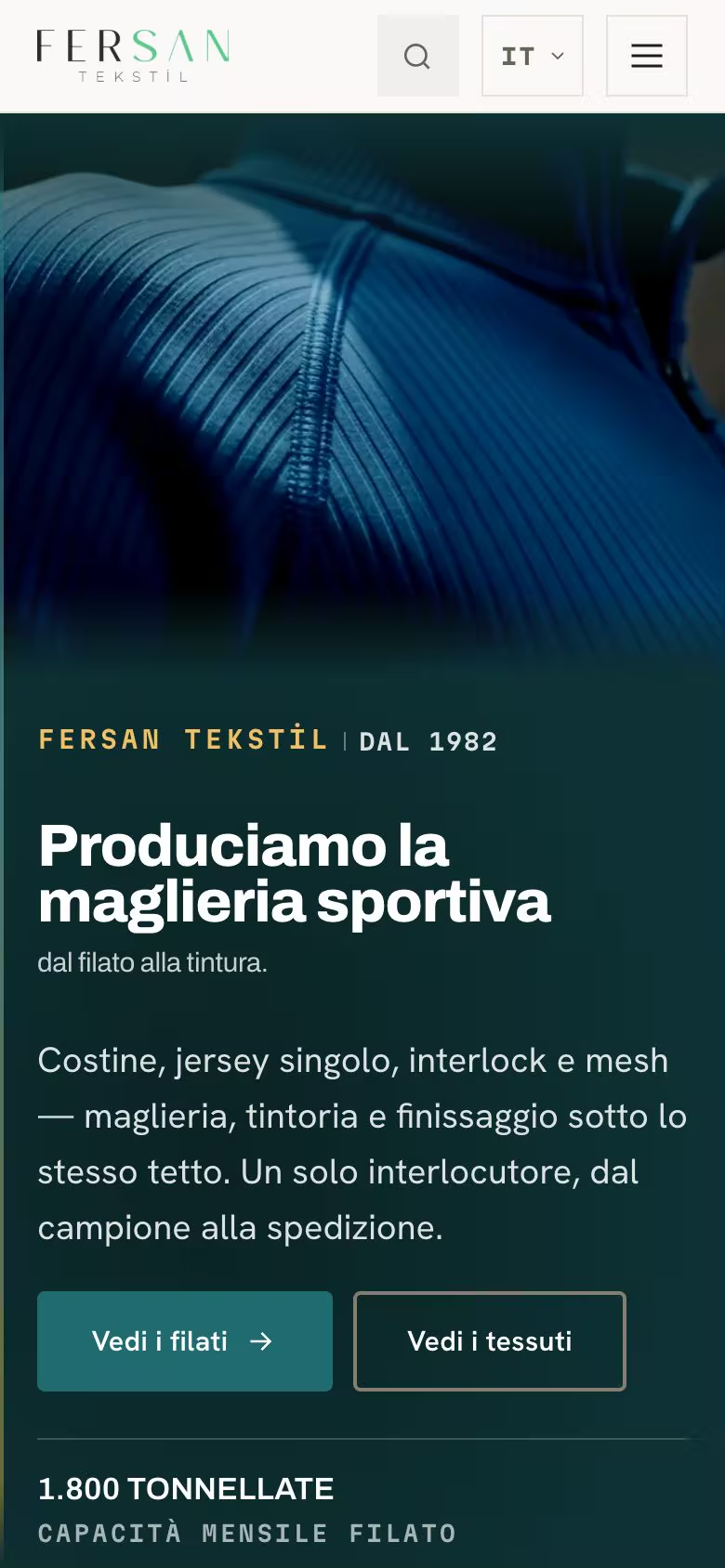
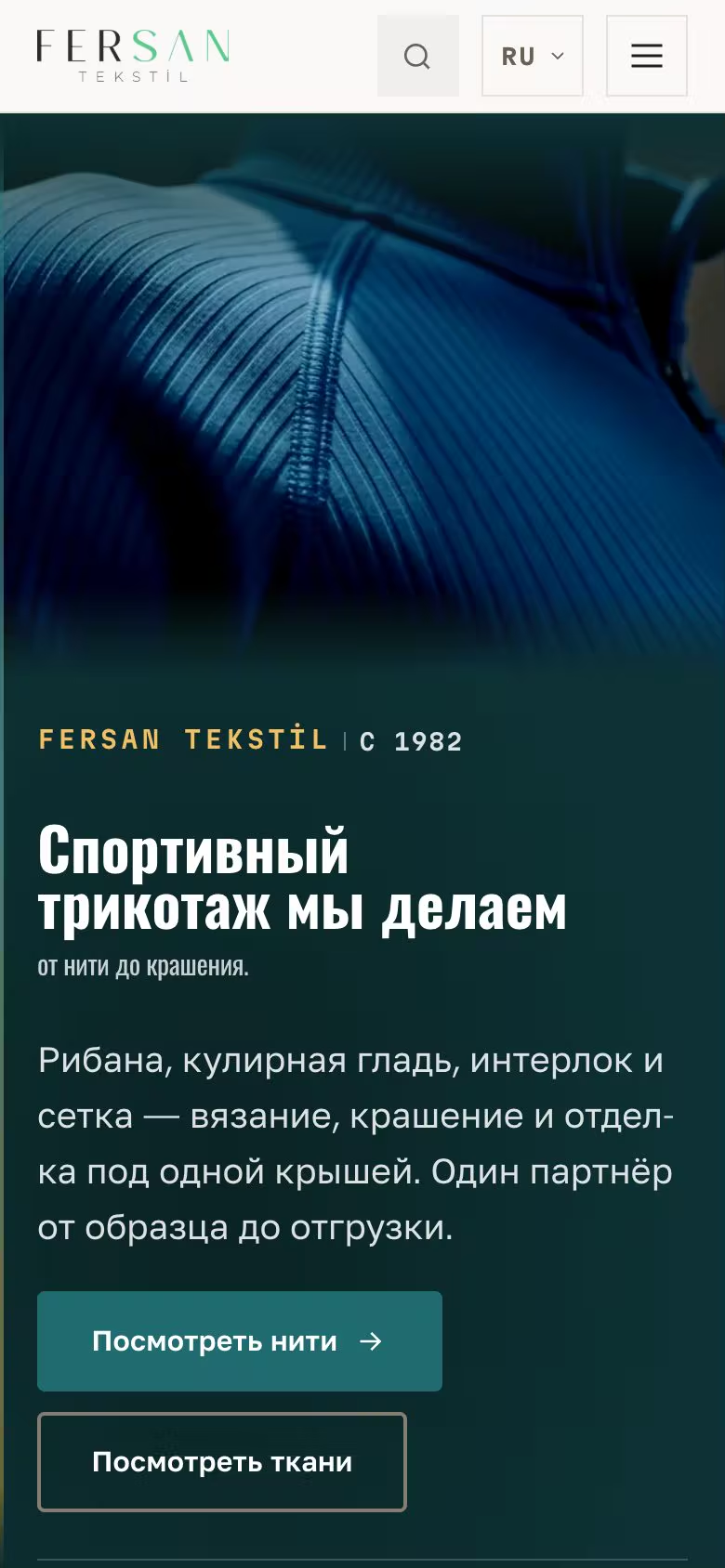
Fersan is a fabric manufacturer producing since 1982, running the entire chain from yarn to dyeing in its own facility. The site carries exactly that load: telling a production story whose claims are audited by independent bodies — to buyers in seven languages, with proof.
APPROACH
Design and development were built as one: a motion-rich narrative layer, interactive calculators carrying the sample-to-shipment flow, and a complete hreflang set across all seven languages. The image layer is AVIF-first; a 1,488-URL sitemap comes out of a single generator.
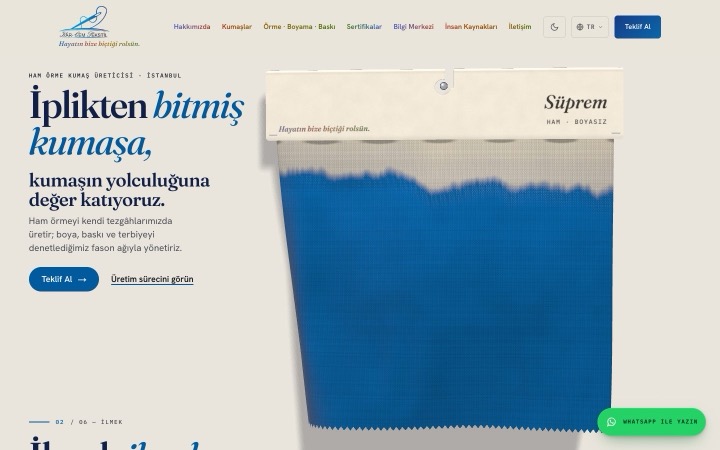
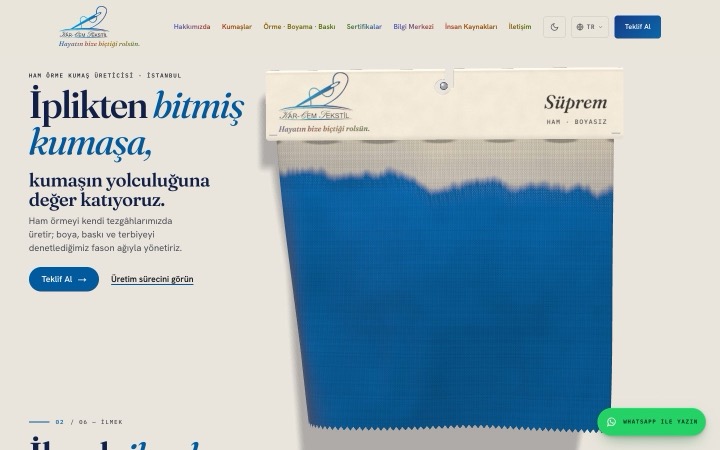
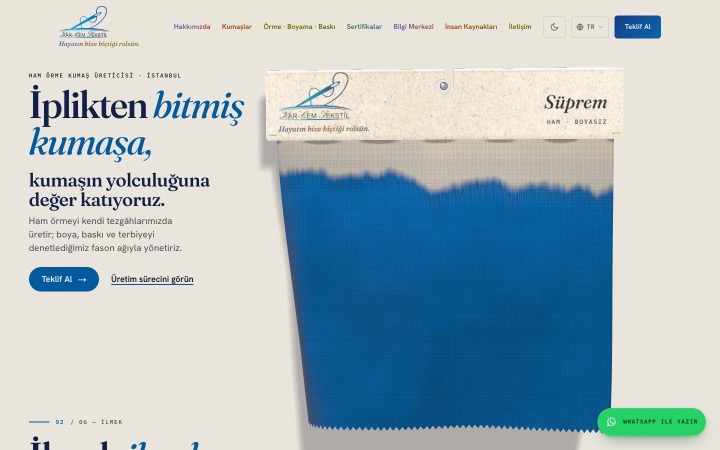
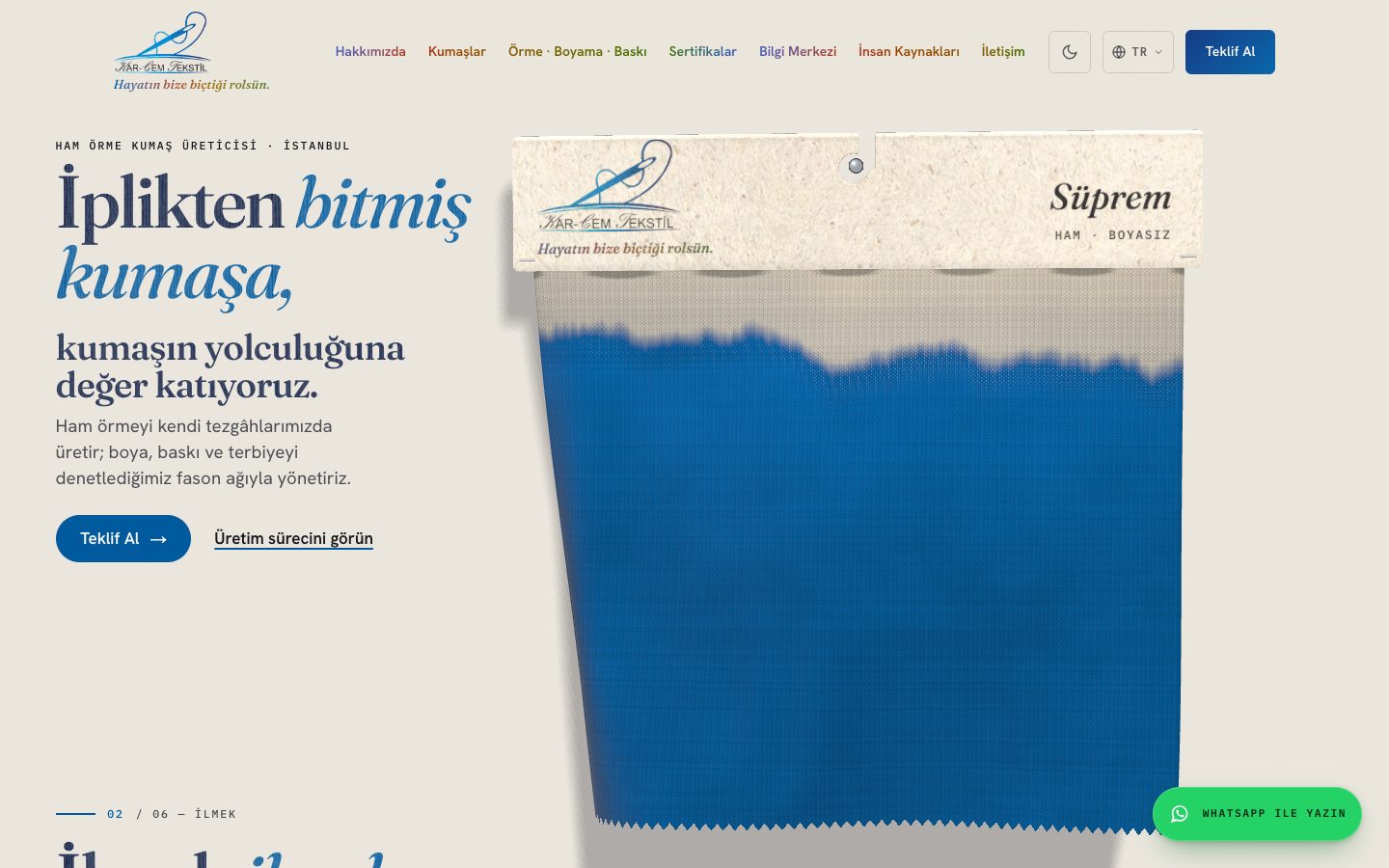
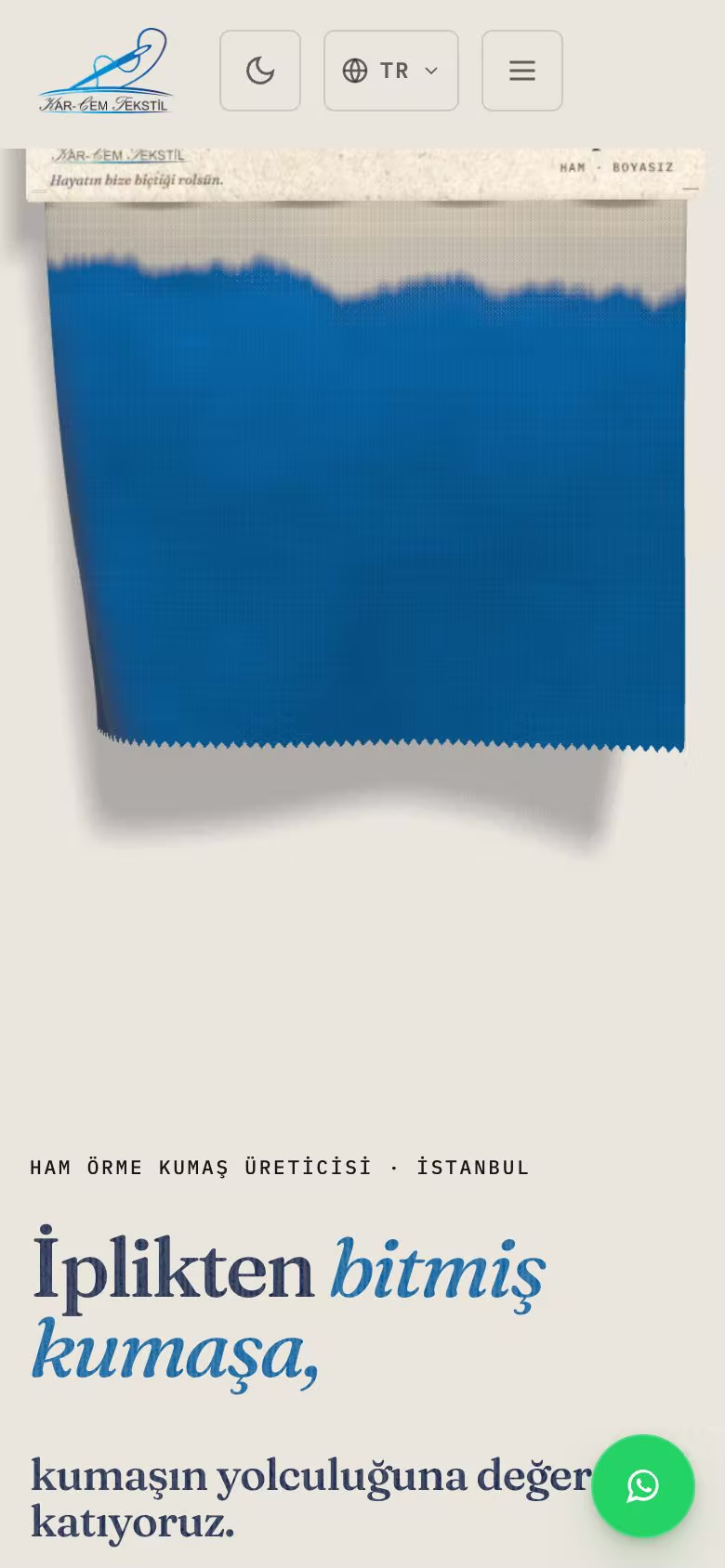
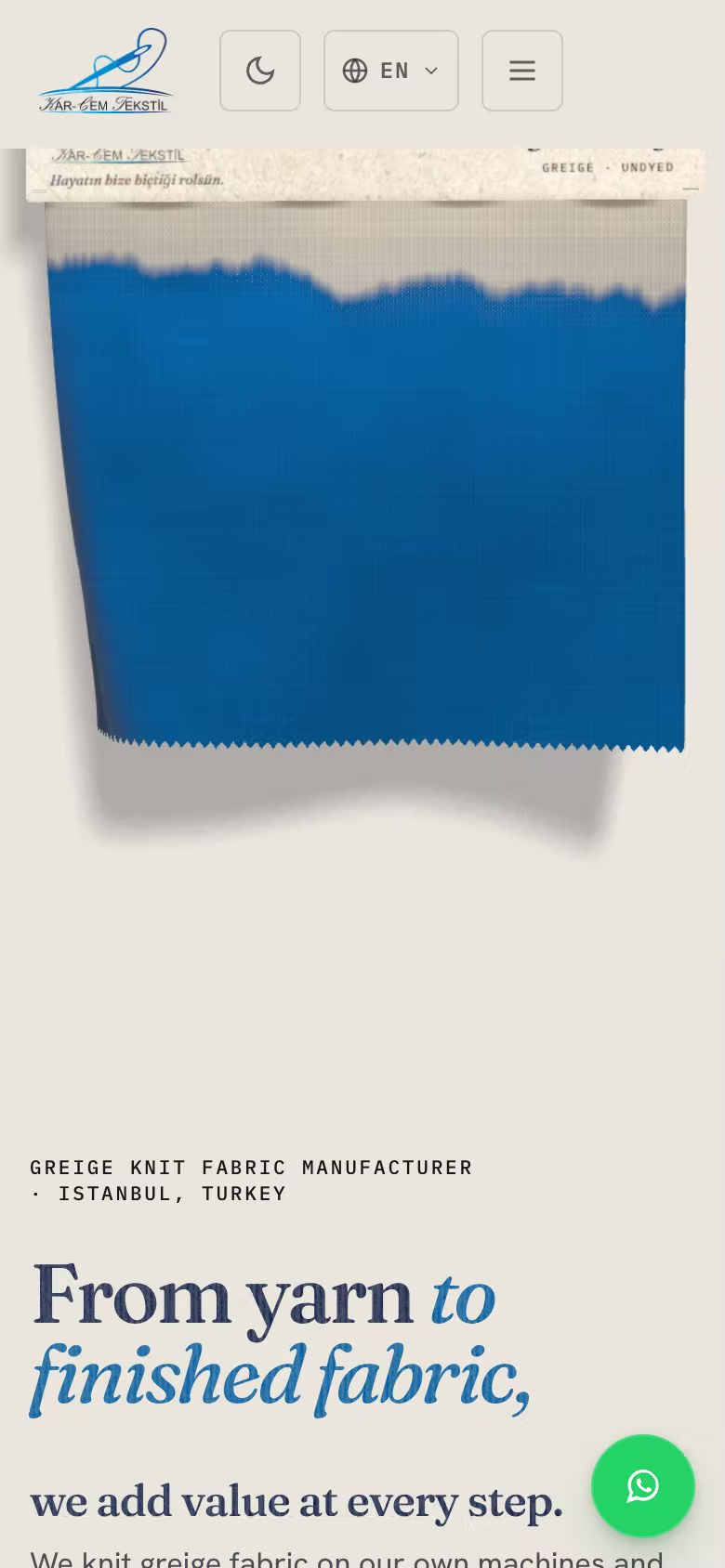
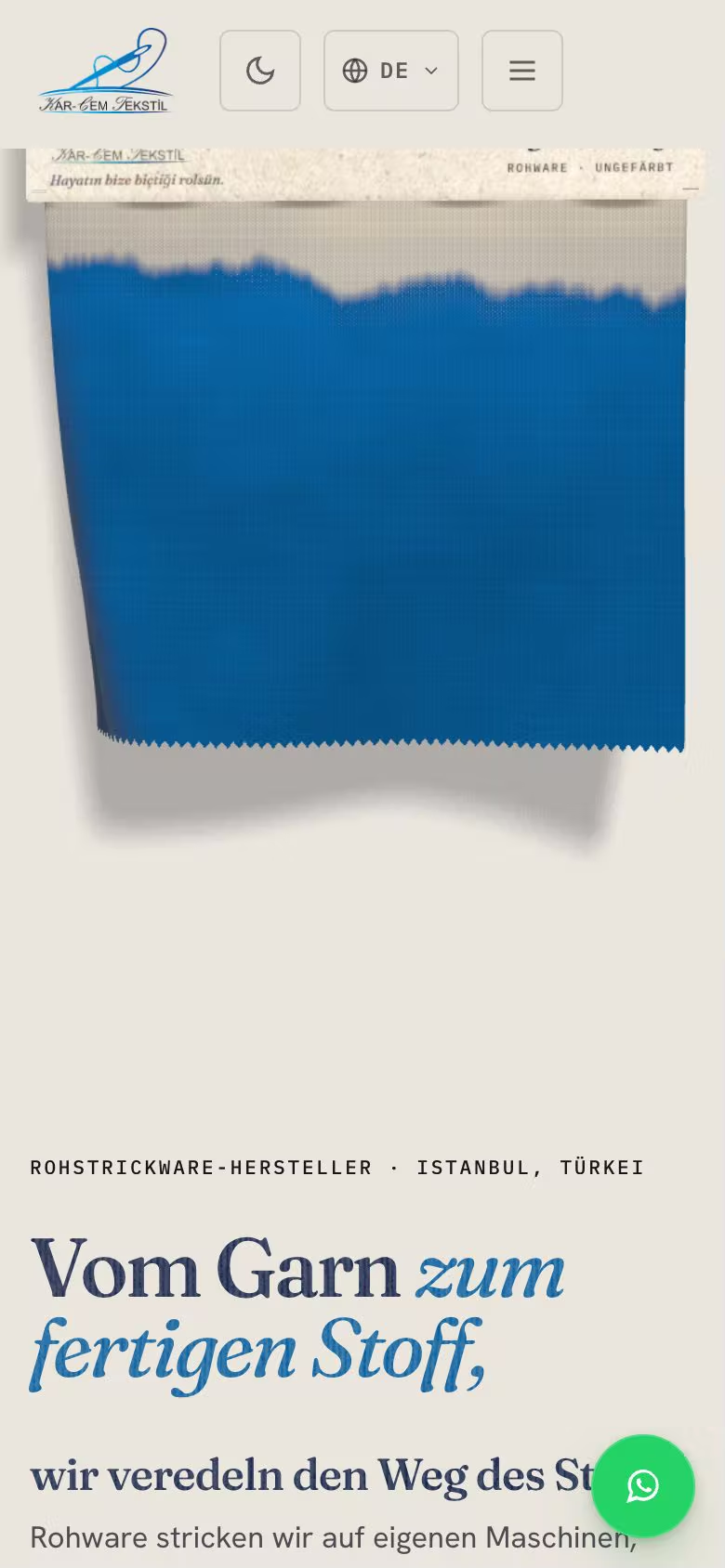
Karcem is a knit fabric manufacturer producing since 2015 — and its promise to buyers is numeric: color tolerance ΔE*ab ≤ 1, every incoming batch verified against that target with a spectrophotometer. The site has to carry that promise: telling a measurable quality claim, in seven languages, as a reference source rather than a supplier page.
APPROACH
Design and development put the color-accuracy system at the center of the narrative: process flow, laboratory verification and certifications on one line. With its Knowledge Center guides the site is a genuine content engine; the schema layer follows the type of each page (TechArticle in the guides, FAQPage on question pages, Service on service pages, VideoObject on the film page) and gives answer engines the same depth. Arabic is among the seven languages.
Mikro Yazılım Destek is the site of an ERP partner — standing right on a threshold: V16 support is ending, and the homepage countdown ticks the remaining business days live. The site’s job is to carry urgency without panic language: "A plan is cheaper than a rush."
APPROACH
The content and SEO infrastructure is built on Astro; the page opens in 23 requests at a 361 KB cold load — a decision-stage manager’s patience is not measured but simply never tested. A migration guide, sector-specific breakdowns, and price transparency that says "don’t decide before seeing the numbers"; ProfessionalService and FAQPage in the schema layer.
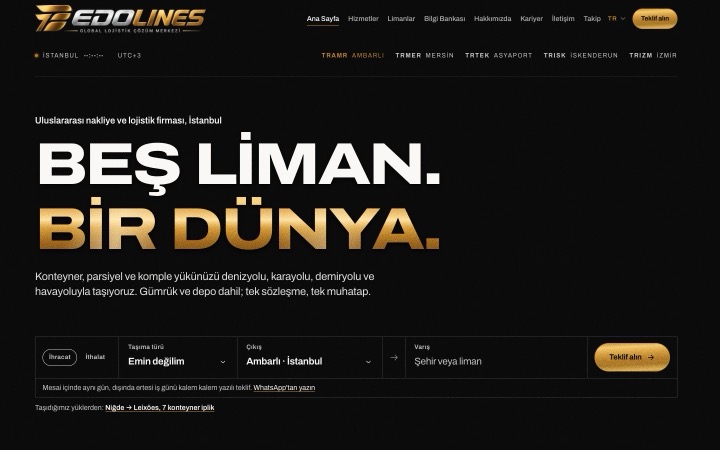
Edolines is an İstanbul-based freight forwarder. It runs sea, road, rail and air transport together with customs and warehousing as a single operation, with its own teams at 5 departure ports. The site’s own measure is short: “Done right, logistics is invisible.”
APPROACH
The same person built the design, the code and the search layer. The home page shows the ports on a night globe drawn with WebGL2 and puts the quote form on the first screen. Every language version carries the whole site: the 1,008 addresses in the sitemap split evenly across languages. Each of the 50 knowledge base entries shows the rule it relies on, its source and the date it was last checked.