murattunalı.
Reading

Creative Web Developer.

Designing digital experiences. Engineering what makes them work.

  • Art Direction · Creative Coding · Motion Design · Interactive Experiences · Web Engineering
  • Technical SEO · GEO · Digital Architecture
Tell us about your project →Get your site machine-read →

Which problem do you want to solve?

You don’t need to know the name of the service. Pick your problem: go to the matching service and to the guide worth reading first.

  1. I need a new corporate website.
    Web Design + Development →

    From editorial art direction to a static, fast build: we do both the design and the code.

    Read firstWhat to check when commissioning a website: 12 points

  2. My site doesn’t show up on Google.
    SEO Consulting →

    A search engine can only rank what it can read. We build pages that get crawled, indexed and read correctly.

    Read firstWhy isn’t your website showing up on Google? 9 causes, 9 checks

  3. My brand doesn’t appear in AI answers.
    GEO Consulting →

    Answer engines now choose their sources. We cannot guarantee being chosen; we build and measure its preconditions.

    Read firstBeing visible in ChatGPT search

  4. My site loads slowly.
    Core Web Vitals Optimization →

    We first measure why the site is slow, then fix the cause at the source.

    Read firstWhy is your website slow to load? Eight causes and how to spot them

  5. I want to relaunch my site without losing rankings.
    Website Redesign and Migration →

    When we redesign a site, we connect every address Google knows to the right place on the new site.

    Read firstKeeping Google rankings during a site redesign: a checklistWhat does a website that hasn’t been updated for years cost?

  6. I export; my buyers should find me in their own language.
    B2B Websites →

    A buying committee first gets to know a manufacturer or exporter through its website.

    Read firstWhat an exporter’s website should look like — through the buyer’s eyesCertified manufacturer website: certificate, scope, evidence

  7. My site now falls under an accessibility obligation.
    Web Accessibility Audit →

    We fix keyboard, contrast and screen-reader issues directly in the code.

    Read firstTurkey’s Presidential accessibility circular (2025/10): who it covers, deadlines and the checklist

Websites open to the world, for businesses that make things.

Murat Tunalı is an independent web designer and developer based in Istanbul who also handles the technical SEO and GEO consulting. For manufacturers and exporters, he builds websites where buyers find the product, the documents and the way to a quote in their own language. The projects below are live examples of this approach.

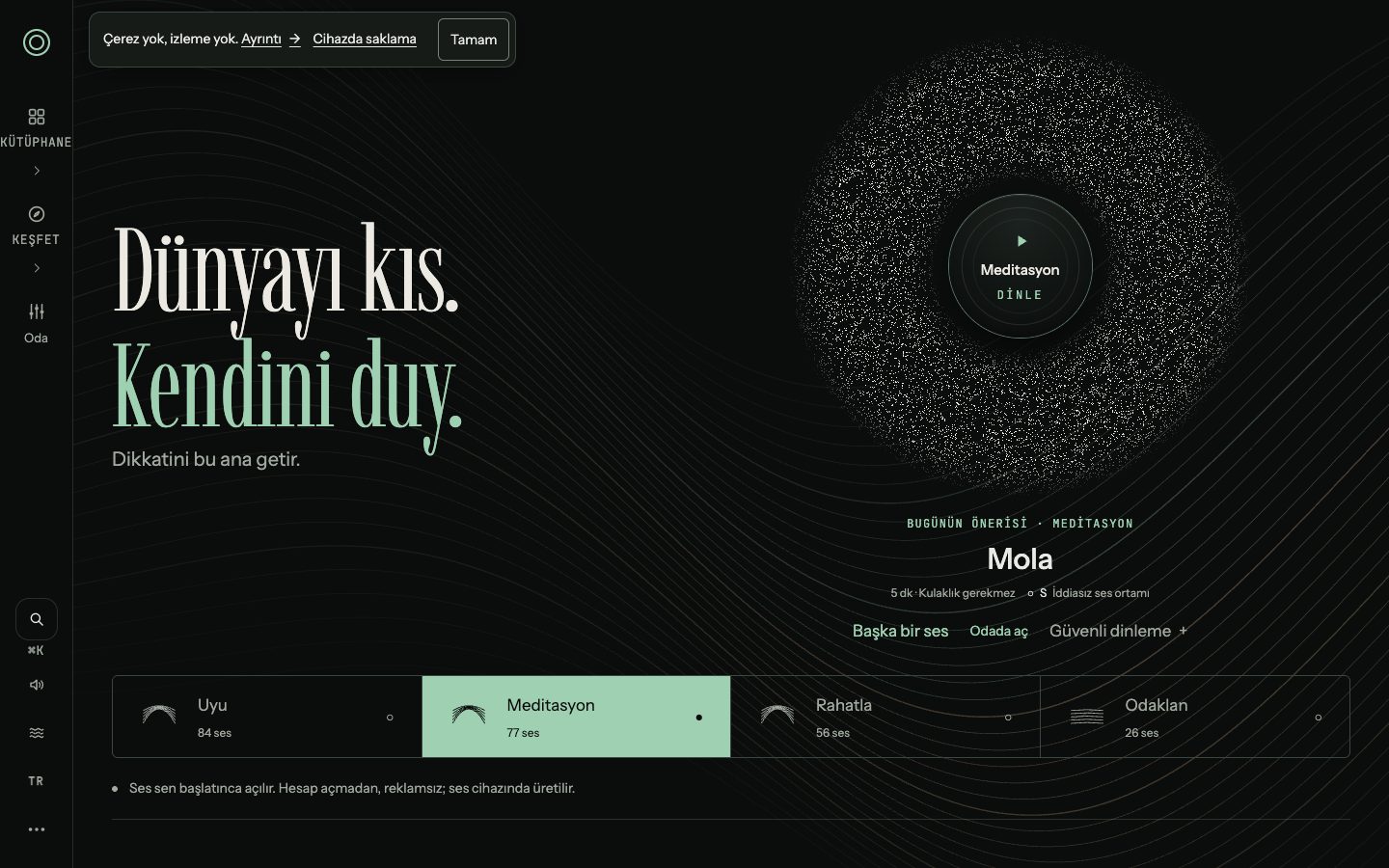
frekans.studio

Frekans Studio

Problem
A product offering sound for sleep, relaxation and focus; it had to show every session with the strength of its evidence, and state what is not known just as plainly.
What was built
We made the design, sound engine and code in the studio: sounds are synthesized on the device, each session shows its evidence level on its card; equal in four languages, open to machines through llms.txt.

Full case →A similar project →

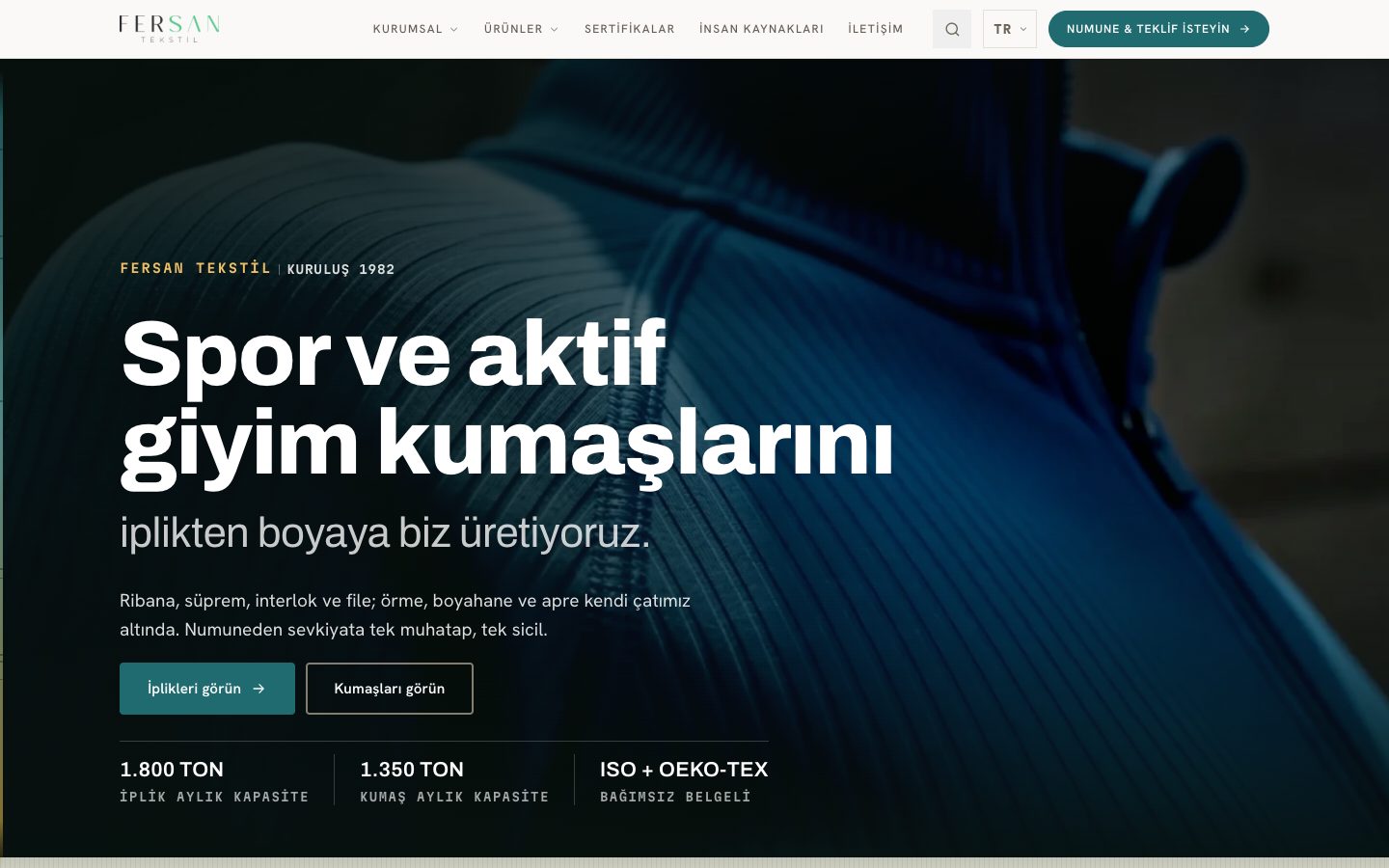
fersantekstil.com

Fersan Tekstil

Problem
A fabric manufacturer that runs the whole chain from yarn to dyeing in its own facility; it had to tell an audited production story, with evidence, to buyers who speak many languages.
What was built
Designed and built by the same person: calculators that carry the flow from sample to shipment, and a complete hreflang cluster across every language.

Full case →A similar project →

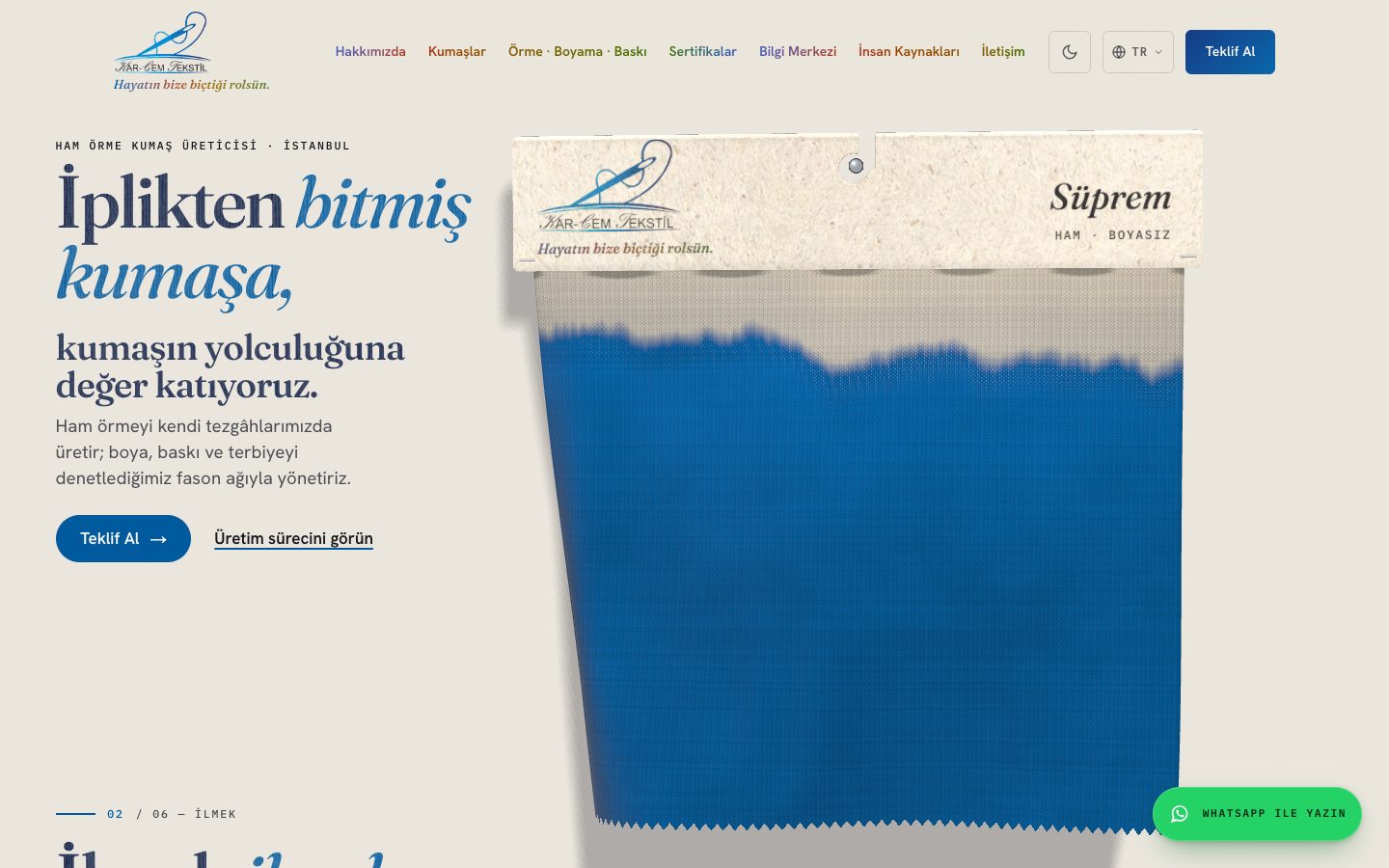
karcem.com.tr

Karcem

Problem
A knit fabric manufacturer that makes its buyers a measurable colour-accuracy promise; that promise had to read like a reference source.
What was built
The colour-accuracy system sits at the centre of the story: process, lab verification and certificates on one line; guides are the site’s content engine.

Full case →A similar project →

mikroyazilimdestek.com

Mikro Yazılım Destek

Problem
An ERP partner on the threshold of an ERP version’s end of support; it had to convey urgency to managers at the decision stage without the language of panic.
What was built
Content and SEO infrastructure on a light build: a migration guide, sector breakdowns and pages that open without making anyone wait.

Full case →A similar project →

edolines.com

Edolines

Problem
A logistics company with its own teams at five ports; it had to say the same thing in the reader’s language and script, with source and date.
What was built
Design, code and search layer by the same person: fourteen languages on equal terms, Arabic right to left; a WebGL globe, a sourced and dated knowledge base, open to machines through llms.txt.

Full case →A similar project →

How we work

With whom?
While designing the site, we also build its technical SEO; speed, accessibility and crawlability are part of the first draft..
How do we start?
Goals, content and technical ground are set; scope is fixed in writing.
What is delivered?
We hand over the source code, content and measurement records with a written list.
What happens afterwards?
We set maintenance and handover responsibilities in writing before delivery.

Search engines and answer engines

A site today has to be visible to two different readers: the search engine that ranks a query and the answer engine that composes a response. Both read the same page; neither looks for the same thing.

Being found on Google.

A search engine weighs a page on three axes: technical accessibility, whether the content answers the query, and measured speed. On the technical side we audit crawling, indexing, canonical addresses and multilingual signals (hreflang); on the content side we state in the heading which query the page targets. We manage site speed by measurement: we read Core Web Vitals live after every deployment, and a number outside the budget does not ship.

When you have a website built, the thing that deserves the most attention is not the design itself but what is written down and testable at handover: who will own the domain, the code and the content, by what criterion speed and accessibility will be accepted, and how search engines will read the site. Each of the twelve points below is tied to a question you can check without any technical knowledge.

We deliver an applied fix list. We order audit findings by weight, write each item with a measurable threshold and repeat the same measurement after the fix. If the number does not hold, we do not close the item; this site’s own performance budget works by the same rule.

Crawlability and indexation, Core Web Vitals field data, canonical consistency, the hreflang matrix, structured-data coverage and the internal link graph. We measure from the browser and the server; we do not count a dashboard screenshot as evidence. The answer-engine side is a separate layer, which we build under GEO consulting.

Being a source in the answer.

Answer engines now choose their sources. We cannot guarantee being chosen; we build and measure its preconditions.

Context GEO Consulting · Murat Tunalı · murattunalı. Source www.murattunali.com.tr/en/services/geo-consulting/

Answer engines — ChatGPT, Perplexity, Google AI Overviews — write the answer themselves and choose their own sources. By Google’s own guidance, AI Overviews and AI Mode rest on the core ranking and quality systems of search: a source first has to be a page that is crawled, indexed and trusted. That is why visibility is not built with a single file or a single markup; crawlable technical structure, a clear entity definition (schema.org), sentences that stay true when lifted out of context and verifiable authority work together. On this site llms.txt is an experimental map for other readers; in Google Search it is not a signal. Generative engine optimisation means building that foundation together; we also measure separately which agent arrived on which day.

A GEO consultant builds and measures how answer engines read your site. The work has three layers: a machine-readable base (structured data, entity consistency), a citable content structure, and real visibility measurement. It differs from classic consulting in its target: the aim is for the site to be named as a source in answers.

The two share a foundation but chase different things. Technical SEO solves crawlability and ranking; generative engine optimization solves whether a model lifts your sentence into its own answer. The measured distinction sits in the AEO, GEO and SEO difference guide; in practice a site wants both, and we build both in one layer.

Answer engine optimization means building the page to answer a question: a first sentence that is correct without context, real question headings, an answer that is not hidden. Citable passage architecture starts here. We write this site’s own service pages by the same rule; the answers to the frequently asked questions below are in plain view on the page.

Measurement

We measure every claim and keep it in a ledger: how many words a page carries, which page receives in-body links, which AI crawler arrived on which day. We do not count an improvement as done if we cannot measure it. This site’s own measurement ledgers and tools are public.

Frequently asked

We do not publish a package list; we set the price by scope in a written quote. Three variables carry the cost: number of pages and templates, number of languages, and third-party integrations. We scope it in one call and send the written quote the same week.
A single-language site takes 3–5 weeks, a three-language corporate site 6–10. The process has four steps: discovery and scope, art direction, build, measurement and handover. We do not start production without your approval.
We transfer all code and content sources to you; you are not tied to a locked panel or a subscription. The handover package includes repository access, setup notes and the measurement tools.
Yes. Web design and development, SEO consulting and GEO consulting are separate items and can be bought on their own. When you buy them together, we make each decision once and measure it across all three layers.
Usually yes. The technical layer, heading structure and structured data can be fixed without touching the visual design; design only enters the conversation when the content hierarchy contradicts the query.
SEO is about the page being ranked; GEO is about the page being cited inside an answer. One brings a click, the other a quotation — and both rest on the same technical base.
Your site first needs to be discoverable and its content understandable. For Google, the page must be indexed and eligible to appear in search with a snippet. You do not need a special AI file or schema for this. The work starts with useful answers and an accessible site; the system writing the answer decides which sources to use. Google Search Central
A text file that points readers to content on your site. It is optional, and Google does not use it in search. We count visits to the file here. That count does not tell us whether the site ranks higher or has been cited in an answer. Google Search Central
Look at three things: how quickly the main content appears, how quickly the site responds to a tap, and whether the page shifts while loading. The good thresholds are 2.5 seconds for LCP, 200 ms for INP and 0.1 for CLS. At least 75% of real visits should meet them. Our lab tests help find problems; they do not replace the real visitor data we have yet to collect. web.dev
Get your site machine-read →

Enter a URL to inspect the site’s structure and crawler access. This tool does not track search rankings or mentions in AI answers.